How much does a concrete patio cost in Amarillo?
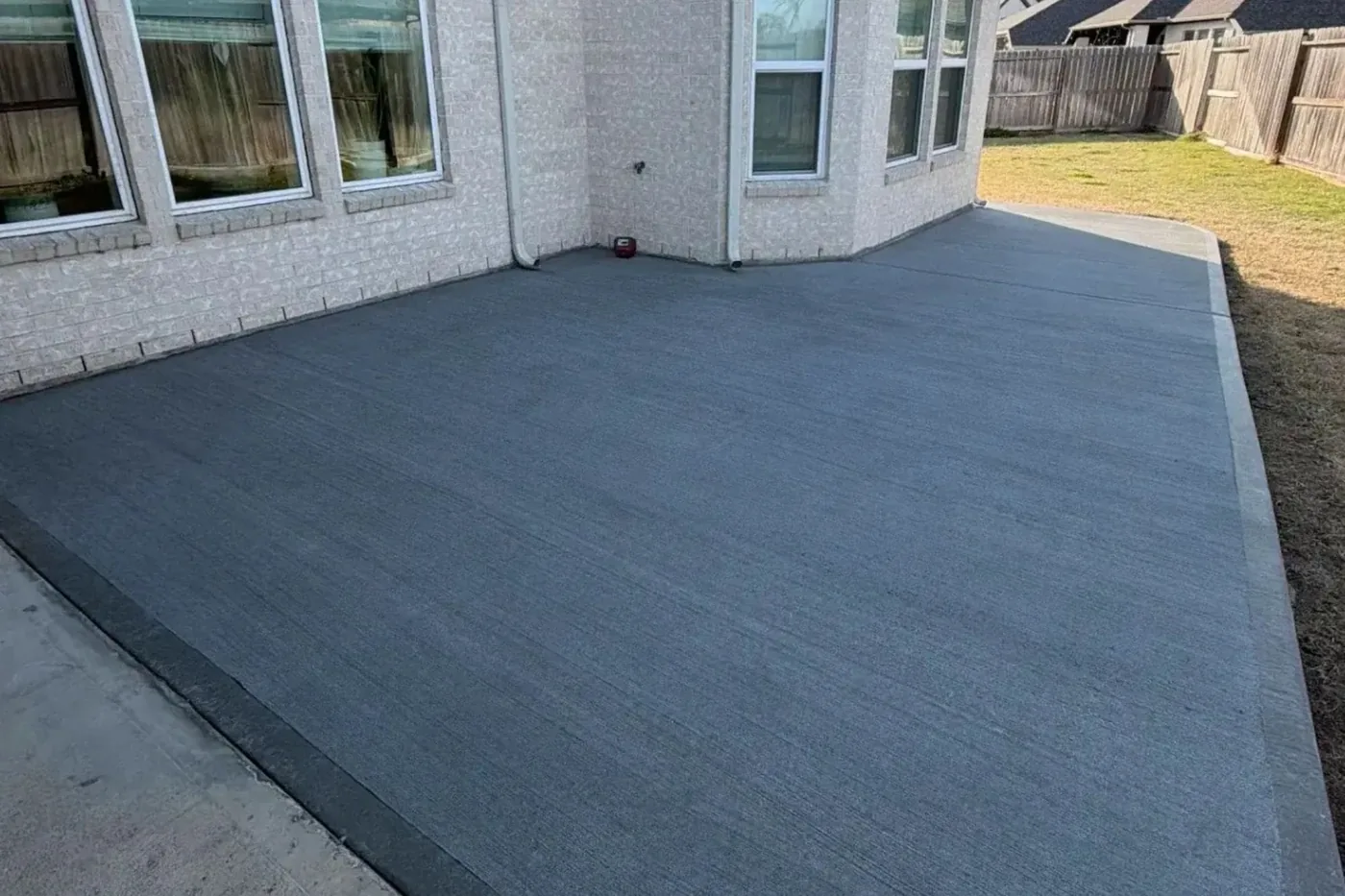
Patio price in the Panhandle comes down to square footage, finish, and how much base work the caliche and clay underneath demand once we dig in. As an honest Texas starting range, most broom-finish patios run about $8 to $14 per square foot, and stamped or decorative work about $14 to $22, before any heavy base prep. We price it after seeing the site and the soil, never a number over the phone we can't stand behind.
How thick should a concrete patio be?
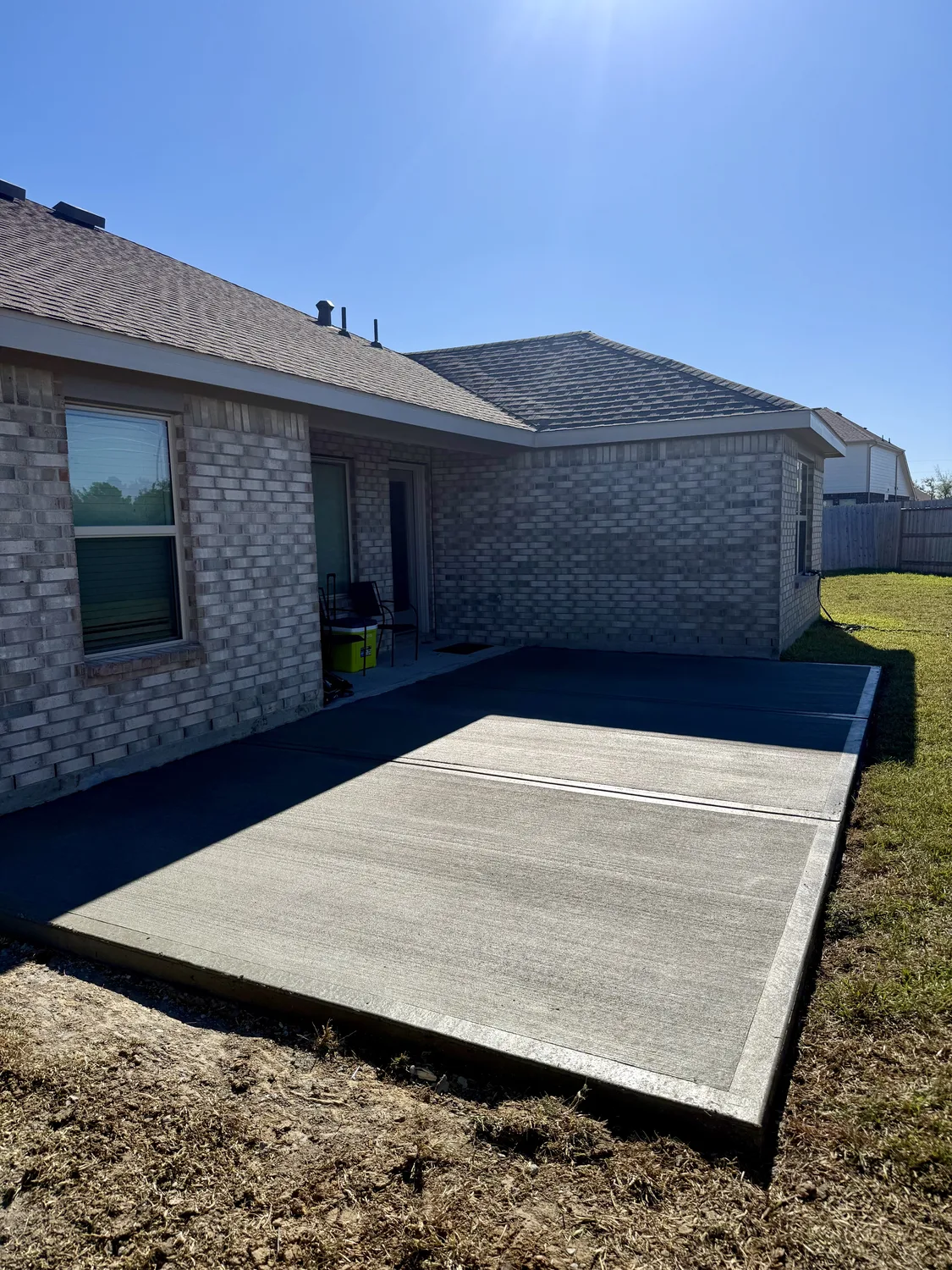
A residential patio sits on a 4-inch slab, which handles furniture and foot traffic, and we go thicker anywhere a hot tub or other real weight is going to land.
Will the clay under my patio crack it?
Shrink-swell clay is the main reason flatwork lifts and cracks around here. It pulls down hard in a long dry spell, then swells when the rain returns, and the caliche layer over it does not move the same way. We handle that at the base: dig in, compact, build on a stable subgrade, and cut control joints so the movement has somewhere planned to go. Nobody can keep concrete dead still on ground like this; what we can do is steer where it gives.
Does Amarillo freeze enough to matter for a patio?
Yes, the Panhandle gets real freezes and hard cold snaps, so we cure above freezing and avoid pouring a patio into conditions that would weaken it. For a ground-level patio the bigger story is still the wet-then-dry clay, but we account for the cold too and tell you straight if a pour should wait.
Stamped or broom finish, which holds up better here?
Broom is the everyday workhorse: textured, sure-footed when a storm blows through, and easier on the budget. Stamped gives you the look of stone or slate but wants resealing on a schedule, since wind-blown grit and the temperature swings are hard on a decorative surface. We will walk both against how you plan to use the space.
Will a concrete patio drain properly?
Yes. We set the slope so a fast plains rain sheds off toward the yard instead of sitting against the slab or the foundation. Water that pools and soaks the clay is exactly what lifts and cracks a patio over time.